
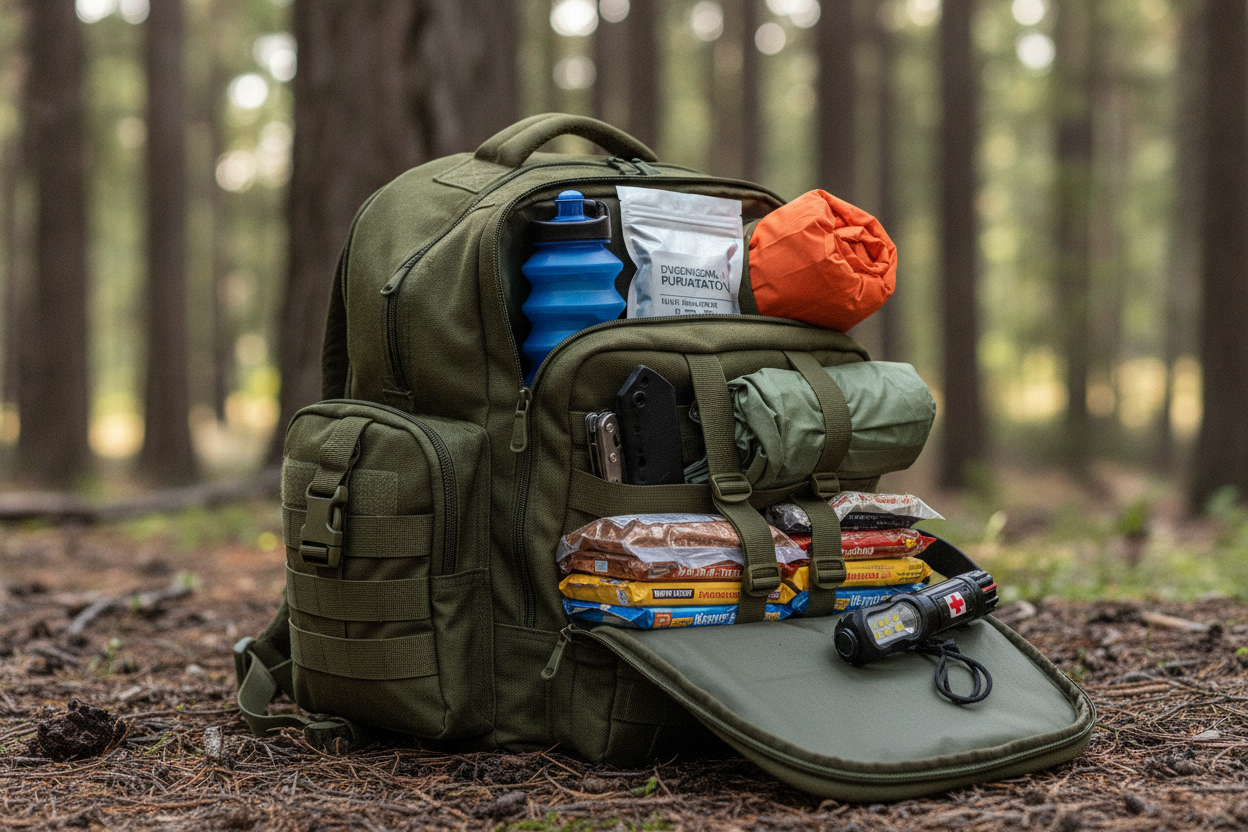
A bug-out bag should help you leave quickly and function independently for at least the first 24 to 72 hours. That means every item needs a clear purpose. Rather than packing every useful item you own, build around the basics: water, filtration, food, shelter, first aid, light, and a few versatile tools.
Start with a pack that fits your body and your load. If the bag is too large, it becomes easy to overpack. If it is too small, you may leave out important items. Aim for something durable, comfortable, and organized with compartments that make access simple under pressure.
Water is one of the first priorities. Include a bottle, a filter, and a backup purification method such as tablets. Add calorie-dense food that does not need cooking right away. Shelter items like a tarp, bivy sack, or poncho can make a major difference if you need to stay outside unexpectedly.
A solid bug-out bag also needs practical extras such as gloves, a flashlight, a map, cash, spare batteries, and copies of key documents. Review the bag twice a year so expired items, dead batteries, and season-specific clothing do not catch you off guard. The best kit is the one you can grab, carry, and trust without hesitation.
Leave a Reply