
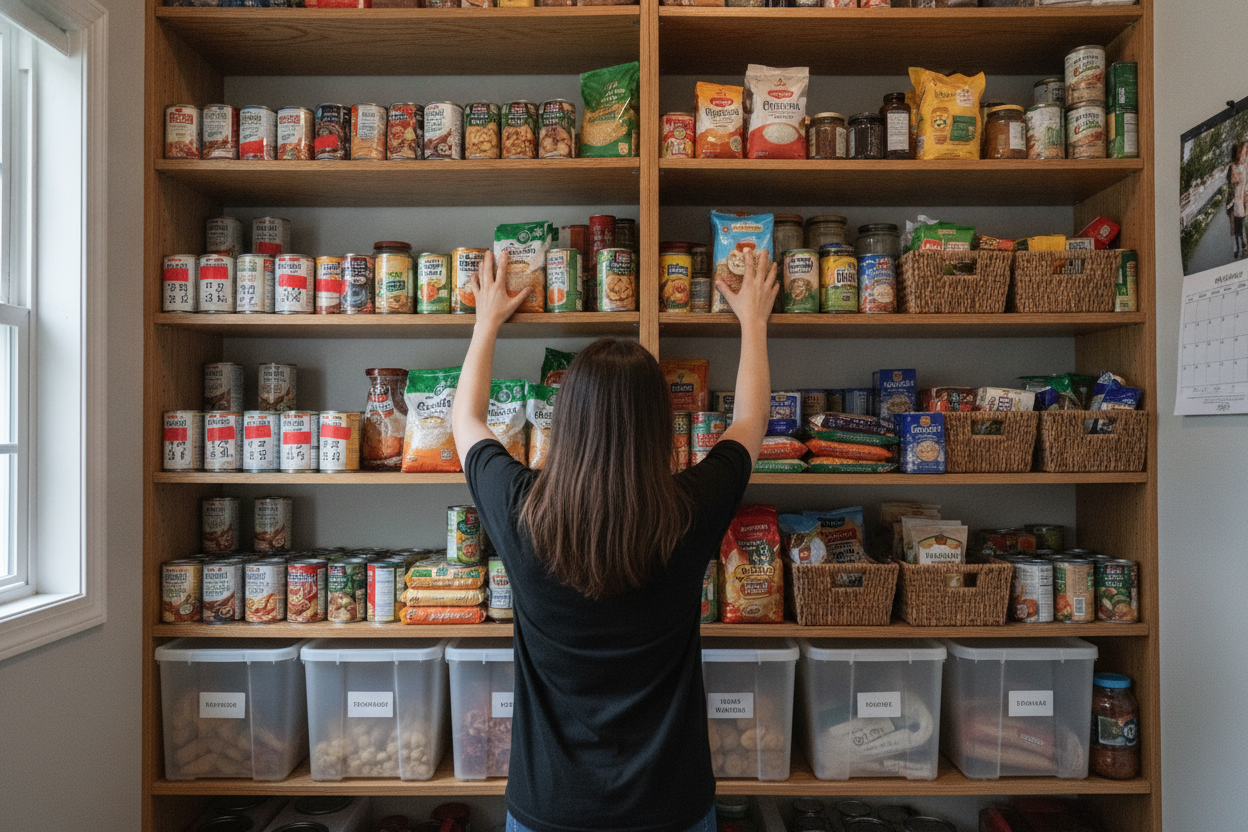
Rotating stored food is one of the easiest ways to protect your investment and reduce waste. If you simply buy shelves of food and forget about them, you may discover expired cans, stale grains, or damaged packaging when you need supplies most. A rotation system keeps your pantry useful every day and ready for emergencies.
The simplest method is first in, first out. Place newer purchases behind older items so you use the oldest food first. Label containers with purchase dates and check them on a regular schedule. This works especially well for canned goods, dry staples, and freezer items that can be tracked clearly.
Rotation also helps you notice what your household actually eats. If certain foods sit untouched, replace them with items that fit your real habits. A food storage plan should support normal meals, not become a museum of emergency purchases. The more often you use your stored food in everyday cooking, the more confident you become in your system.
It is smart to keep a written inventory, even a simple one on paper or a spreadsheet. That way, you know what is running low and what needs replacement. Good rotation turns food storage from a static pile into an active, reliable part of preparedness.
Leave a Reply